Make Magic With Your Ukulele! 50 Looper Pedal Ideas

A looper pedal is one of the best tools a musician can have. Whether you're a beginner or experienced, it helps with timing, improvisation, and composition. But once you've got the basics down, you might think: What else can I do with my looper?
I’ve put together 50 fun looper pedal ideas to help you experiment, practice, and create amazing sounds!
- Table of Contents
- 🎼 Practice & Skill Development
- 🎭 Creative Sound Experiments
- Try and add rhythmic instrument
- Experiment with Reversed Loops
- Various tempo for various mood
- Create Ambient Soundscapes – Slowly build up dreamy layers
- Record a Loop and Use an Effects Pedal Over It – Wah, delay, or distortion!
- Play a Song Backwards – Reverse a chord progression for a unique sound.
- Use a Looper to Build a DJ-Style Track – Layer beats, bass, and melodies.
- Try Odd Time Signatures – Loop in 5/4, 7/8, or other uncommon rhythms.
- Create a Fake Double-Tracking Effect – Slightly change each overdub.
- Build a Sound Collage – Mix speech, music, and random noises.
- Loop an Ambient Drone and Meditate – A relaxing way to practice!
- 🎤 Singing & Vocal Looping
- Record a Beatbox Groove – Use your mouth to create a drumbeat and loop it.
- Harmonize Your Own Voice – Record different vocal layers for a choral effect.
- Create a Vocal Bassline – Use a deep voice to make a rhythmic vocal bass.
- Loop a Chorus for Call-and-Response Singing – Great for practicing vocals!
- Add Ambient Vocal Layers – Hum or sing soft harmonies to create atmosphere.
- Use a Looper for Vocal Warm-Ups – Record a simple arpeggio and sing over it.
- Practice Riffing and Improvisation – Sing over your looped progressions.
- Create a Vocal Soundscape – Experiment with whispers, clicks, and harmonics.
- Layer Different Vocal Textures – Mix spoken word, singing, and percussive sounds.
- Loop a Lyrical Phrase – Repeat a single phrase and explore different melodies.
- 🎸 Performance & Composition Ideas
- Build a Full Song – Start with a rhythm loop, then add bass, melody, and solos.
- Record a Verse Loop – Play the verse chords on a loop and perform the chorus live.
- Layer Harmonies – Record vocal or instrumental harmonies to create a choir effect.
- One-Person Band – Add different percussive and melodic elements for a full-band sound.
- Create a Chord Progression Library – Save loops of different chord progressions to practice over.
- Experiment with Different Strumming Patterns – Record a loop and change your rhythm over it.
- Loop a Melody and Harmonize It – Create beautiful harmonized phrases by layering melodies.
- Use Your Looper as a Delay Effect – Short loops can simulate a delay/reverb effect.
- Switch Between Different Layers – Use undo/redo functions to add and remove elements dynamically.
- Loop a Drone Note – Play a continuous note and improvise over it.
- 🎵 Genre-Specific Fun
- Loop a Reggae Groove – Play an offbeat skank and solo over it.
- Play a Blues Progression – Add call-and-response licks.
- Jam Over a Funk Groove – Create a percussive, syncopated rhythm and riff over it.
- Loop a Flamenco Rhythm – Add fast strums and palmas (claps).
- Build a Classical Fingerpicking Piece – Layer arpeggios and melodies.
- Play a Rock Riff and Add Layers – Power chords, lead, and harmonies.
- Experiment with Jazz Voicings – Loop a ii-V-I progression and improvise.
- Make a Lo-Fi Hip Hop Beat – Layer mellow chords and chilled rhythms.
- Create a Celtic-Inspired Drone – Loop a droning chord and play folk melodies.
- Mash Up Two Songs Into One Loop – Combine different melodies for fun results!
- Conclusion
🎼 Practice & Skill Development
Improve Your Timing
Loop a simple beat and practice locking in with it.
You can also improve your timing using this great metronome: Simple Littl' Metronome. Play Better And Have More Fun . Or a more advanced one: Accelo' Metronome: Go From Slow To Fast With Confidence (Free Tool!)
Practice Scales Over a Loop
Loop a progression and try different scales.
Experiment with the stop
Experiement with stoping the loop. And starting it again.
Try stoping only the overdub. And resuming it.
Great to structure your track, and give it some extra kick!
Work on Dynamic Playing
Adjust intensity in each looped layer.
You can do that using different dynamics for each layer.
With many loop pedals, you have a volume for the output loop sound. Thus, what you play will be louder than what you've recorded in the loop.
You can cheat this exercise around dynamics by using an expression pedal.
However, it's great to work on your dynamic playing anyhow :-)
Experiment with Syncopation
Play ahead or behind the beat.
But what's a syncopation?
If you don't know what syncopation mean, it's the "practice of displacing the beats or accents in music or a rhythm so that strong beats become weak and vice versa".
In othr words, syncopation in music is the concept of playing rhythms that accent or emphasize the offbeats. It shifts or displaces a standard rhythm by stressing beats generally not stressed.
The time signature of a piece of music establishes a regular pattern of strong and weak beats. Syncopation disrupts this pattern by accenting weaker upbeats rather than the usual strong downbeats.
For instance, in a 4/4 time signature, the emphasis typically falls on the first and third beats. However, with syncopation, the focus may shift to the second and fourth beats or even to the spaces between them.
Play with Different Fingerpicking Patterns
Take a chord progression. For example:
G F Am7 C
Play this chord progression using a fingerpicking pattern, and record it.
Record another layer by tring another fingering pattern.
Loop a Progression and Test Different Strumming Styles
Strum, pick, slap, mute!
It's a fun way to explore new strumming styles!
Use a Looper for Sight Reading
Loop a rhythm and play different melodies over it.
Use a looper to do your own metronome
How to do it?
Record doing a rhythm on your ukulele by using it as a drum. Maybe hit rhythmically the bridge (gently). It works generally the best.
Or you can try another part of your ukulele's body, but the piezzo (the micorphone that pick up the sound in your ukulele) may not get it.
Record yourself.
After playing 2 bars of 4 beats, you can then use it as a metronome. You can then make sure that all the parts of the song your are studying are in the same tempo.
More complex rhythm.
Of course, you can use a more complex rhythm. Maybe using chucks, for instance.
Or muted strings.
For instance, you can do a chuck on the first beat (or maybe a down with muted strum if you aren't sure what a chuck is). Then for the 3 other bets, hit your ukulele on the bridge (gently).
That way you have the first beat accentured. Perfect to rehearse!
You can also do subdivision of bits, hitting the ukulele on an other part.
You can also check a great metronome here: Simple Littl' Metronome. Play Better And Have More Fun.
🎭 Creative Sound Experiments
Add Rhythmic to Your Game: Make a Percussion Loop
Tap on your instrument or use body percussion.
You can even try using your ukulele as a drumming instrument to add some rythm.
Explore drumming on your uku
But be gentle! Especially during parties... (I broke one ukulele once!)
Explore where you hit your ukulele. Pay attention about the sound of it.
Explore how you hit your uk. With a flat hand? With a knockin' hand? With the tip of your fingers? With the flat par of your fingers?
It's a great and fun thing to explore!!
The lowest sound I could get on some uk is tapping on the sound hole with a flat hand.
And the highest sound is with a knock on the uku.
--
Then alternate a bass hit with a high hit and feel
Record and loop it!
Some like to do the percussive sound first, then add the chords, then the melody as a finger picking.
I prefer starting with the chords, then the percussive sound. It feels better as a song progression.
Try and add rhythmic instrument
If you have a microphone, you can very easily add rhythmic instruments. You may have some somewhere... maybe they are instruments you have since you were a young kid.
You can even experiment with anything you have in your house. A pan, a big casserole dish, a bucket!
Experiment with Reversed Loops
Some loopers have a reverse function!
Various tempo for various mood
Feeling more relax? Try something slower, around 65BPM.
Want to feel more energic? Try something around 125-130BPM.
It's great to force yourself and try various tempo. And see what you can do.
Create Ambient Soundscapes – Slowly build up dreamy layers
Record a Loop and Use an Effects Pedal Over It – Wah, delay, or distortion!
Exploring pedal effect is fun. But you get other most or all pedal effects after one session.
For the next sessions, pick one (or max 2 effects) that you like, and try using it during all the session.
Rince and repeat.
Play a Song Backwards – Reverse a chord progression for a unique sound.
Use a Looper to Build a DJ-Style Track – Layer beats, bass, and melodies.
Try Odd Time Signatures – Loop in 5/4, 7/8, or other uncommon rhythms.
Create a Fake Double-Tracking Effect – Slightly change each overdub.
Build a Sound Collage – Mix speech, music, and random noises.
Loop an Ambient Drone and Meditate – A relaxing way to practice!
🎤 Singing & Vocal Looping
Record a Beatbox Groove – Use your mouth to create a drumbeat and loop it.
Harmonize Your Own Voice – Record different vocal layers for a choral effect.
Create a Vocal Bassline – Use a deep voice to make a rhythmic vocal bass.
Loop a Chorus for Call-and-Response Singing – Great for practicing vocals!
Add Ambient Vocal Layers – Hum or sing soft harmonies to create atmosphere.
Use a Looper for Vocal Warm-Ups – Record a simple arpeggio and sing over it.
Practice Riffing and Improvisation – Sing over your looped progressions.
Create a Vocal Soundscape – Experiment with whispers, clicks, and harmonics.
Layer Different Vocal Textures – Mix spoken word, singing, and percussive sounds.
Loop a Lyrical Phrase – Repeat a single phrase and explore different melodies.
🎸 Performance & Composition Ideas
Build a Full Song – Start with a rhythm loop, then add bass, melody, and solos.
Record a Verse Loop – Play the verse chords on a loop and perform the chorus live.
Layer Harmonies – Record vocal or instrumental harmonies to create a choir effect.
One-Person Band – Add different percussive and melodic elements for a full-band sound.
Create a Chord Progression Library – Save loops of different chord progressions to practice over.
Experiment with Different Strumming Patterns – Record a loop and change your rhythm over it.
Loop a Melody and Harmonize It – Create beautiful harmonized phrases by layering melodies.
Use Your Looper as a Delay Effect – Short loops can simulate a delay/reverb effect.
Switch Between Different Layers – Use undo/redo functions to add and remove elements dynamically.
Loop a Drone Note – Play a continuous note and improvise over it.
🎵 Genre-Specific Fun
Loop a Reggae Groove – Play an offbeat skank and solo over it.
Play a Blues Progression – Add call-and-response licks.
Jam Over a Funk Groove – Create a percussive, syncopated rhythm and riff over it.
Loop a Flamenco Rhythm – Add fast strums and palmas (claps).
Build a Classical Fingerpicking Piece – Layer arpeggios and melodies.
Play a Rock Riff and Add Layers – Power chords, lead, and harmonies.
Experiment with Jazz Voicings – Loop a ii-V-I progression and improvise.
Make a Lo-Fi Hip Hop Beat – Layer mellow chords and chilled rhythms.
Create a Celtic-Inspired Drone – Loop a droning chord and play folk melodies.
Mash Up Two Songs Into One Loop – Combine different melodies for fun results!
Conclusion
A looper pedal is more than just a practice tool—it’s an endless playground for creativity! Whether you want to improve your timing, build a song, or experiment with soundscapes, these 50 ideas will help you get the most out of your looper.
Which one are you going to try first? Let me know in the comments! Happy looping! 🎶
--- Ukulele title example
Would you like some help on the regular basis?
Why not book a lesson .
You'll have the help of an expert to progress and improve, while keeping it fun.
I hope this article has helped you :)
Have a fantastic day!
And you?
Feel free to leave a comment below.
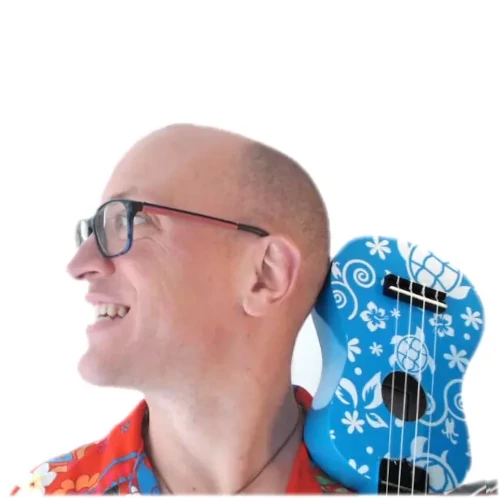
Hey there! Looking for a fun way to strum your way into the world of music?
Well, look no further! I'm Nicholas, your friendly ukulele teacher extraordinaire! With my expertise and a sprinkle of laughter, I'll have you strumming those strings like a pro in no time.
Get ready to unleash your inner musician and embark on a musical journey.